Seinfeld was Onto Something: The “Difficult” Patient

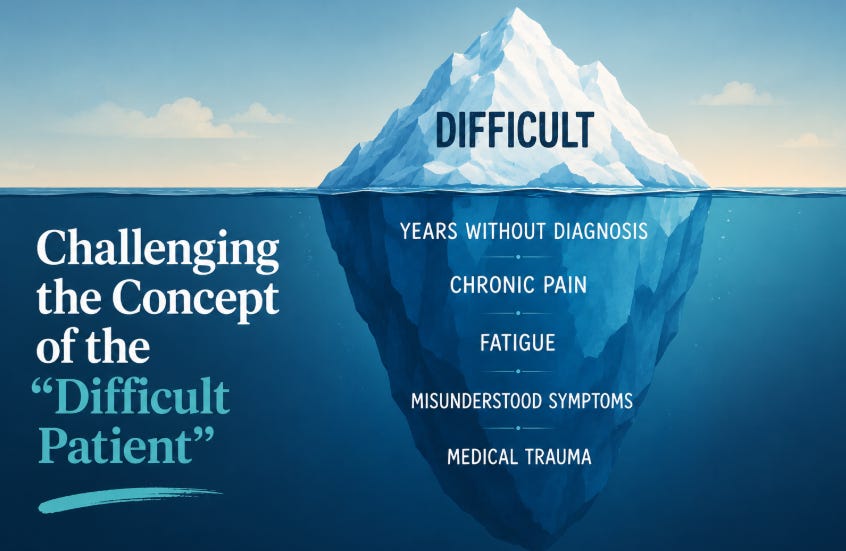
There’s a memorable Seinfeld episode where Elaine goes to the doctor with a rash. While waiting, she discovers her chart says she’s “difficult.” After questioning the label, she’s sent home without being examined. Hijinks ensue as every doctor she encounters seems to be “in on it.” By the end of the episode, Kramer wears Elaine’s scarf and develops the same rash—confirming her symptoms were real. The storyline is great for laughs, but the underlying dynamic is all too serious for people with chronic conditions.
When the medical stakes are much higher, being labeled “difficult” is no laughing matter. People with fibromyalgia, Long Lyme, and other infection-associated chronic illnesses are especially vulnerable because standard labs and imaging often come back “normal.” There’s also a gender dynamic. Many of these complex conditions disproportionately affect women, who are much likelier to have their concerns dismissed by providers. The common denominators include invisible symptoms like pain, fatigue, disrupted sleep, and brain fog that medicine too often minimizes.
Every time symptoms like these are explained away by providers, patients wait longer for answers. Those with fibromyalgia face diagnostic delays of more than six years, and patients with chronic fatigue can remain in diagnostic limbo even longer. Over time, skepticism itself can become part of the medical record.
When the chart never forgets
In today’s healthcare, the reality can be strikingly similar to Elaine’s experience. Electronic medical records allow assumptions and labels to travel from provider to provider, influencing care decisions before a patient even enters the room. There’s a reason people with chronic illnesses turn to online communities for validation, advice, and support. When symptoms are repeatedly overlooked by physicians, people will turn elsewhere simply to be believed.
More than 130 million Americans have a chronic illness, including conditions that can’t be confirmed through scans, bloodwork, or biomarkers. Syndromes involving nociplastic pain—caused by altered pain processing rather than tissue damage—are not diagnosed through testing, but by listening for symptom patterns. When doctors give more credence to the chart than to what a patient says, coded language like “difficult,” “anxious,” or “pain out of proportion” can shape care or lead to no care at all. Meanwhile, patients can grow sicker as they are effectively blacklisted.
So it’s critical to question assumptions in the medical record. For instance, “pain out of proportion” to what? In addition to being clinically vague, such phrases can prejudice the next provider as patients desperately search for diagnosis and treatment. What’s in the chart should never matter more than what physicians hear from the patient in front of them.
Question the label, not the patient
In this era of electronic medical records, Elaine’s observation seems prescient: “You can’t change your chart.” The challenge is ensuring that medical records inform care without judging the patient. With increasing pressure on physicians to speed through appointments, medical training should place greater emphasis on recognizing symptom patterns—especially when earlier conclusions may have missed the bigger picture. That also means health systems must allow more time for evaluating complex conditions instead of rushing to closure.
There are FDA-approved medicines that can help patients manage a number of chronic conditions. But before patients can benefit from these advances, their symptoms must be taken more seriously than any stigma in their records. Medical education must increasingly emphasize nociplastic pain and other chronic conditions that can’t be confirmed through standard testing. When the default is to label the patient rather than look beyond normal test results, patients lose every time.
Seinfeld was right: What’s in the chart can be hard to escape. But the real “difficult” patient may simply be the one who’s been misjudged. People who are hurting, exhausted, and searching for answers deserve far better than brush-offs. They need providers who listen, question assumptions, and keep working toward diagnosis and treatment. For millions living with invisible chronic conditions, medicine can still get it right.
About the Author
Seth Lederman is co-founder, CEO and chairman of Tonix Pharmaceuticals Holding Corp., a biotech company dedicated to developing novel medicines for central nervous system disorders.
The medications cause the problems. Stop taking them.
I hear what you are saying.
My late father suffered for more than 1/2 of my adult life with chronic pain/fibromyalgia which took YEARS to finally be diagnosed with/and many other multiple medical issues and spine diagnoses.
I can empathize as a loved one.
Sometimes these patients are referred to as having complex medical issues/cases/conditions…
It’s so sad and unfortunate to apply this title to a patient- I mean a person.